Stark County Connects Businesses.
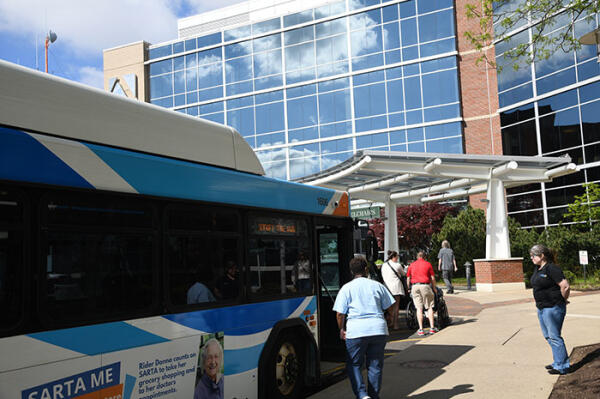
Our extensive transportation infrastructure supports growth.
Stark County is located in the middle of the biggest market and supply chain in the United States, all connected with a comprehensive and widespread transportation infrastructure.
The Canton/Stark County region is situated at the crossroads of America. Located in Northeast Ohio with a population of over 4 million persons, we are a one-day drive from 30% of the total U.S. population, employment, personal income, and retail sales.
Stark County provides strong multimodal connectivity supporting both inbound supply chains and outbound distribution. Key assets include:
- Interstate 77
- U.S. Route 30
- Access to Interstate 76 and the Ohio Turnpike
- Akron Canton Airport, with competitive air service and national connectivity
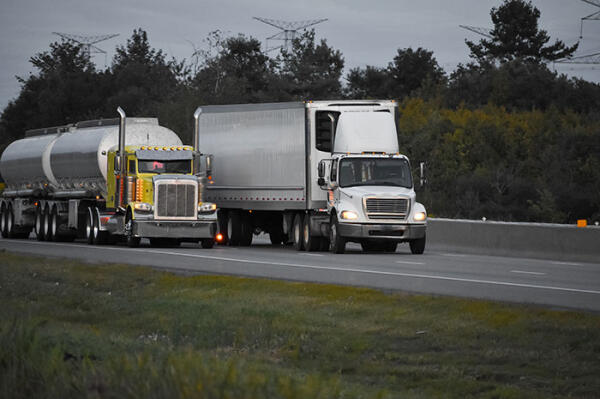
This network supports efficient truck-based distribution and access to regional and national markets. Businesses that have relocated to our county benefit from being mere minutes from major interstates, extensive rail, an airport that is investing $110 million dollars in improvements, abundant water, skilled workforce, and low-cost utilities.

Airport Services
- Akron-Canton Airport
- 4 airlines, 23 nonstop flights, 150+ one-stop flights, and 99+ international connections
- "A better way to go®" with significant recent investments in runway, concourse, and parking upgrades

Highway Access
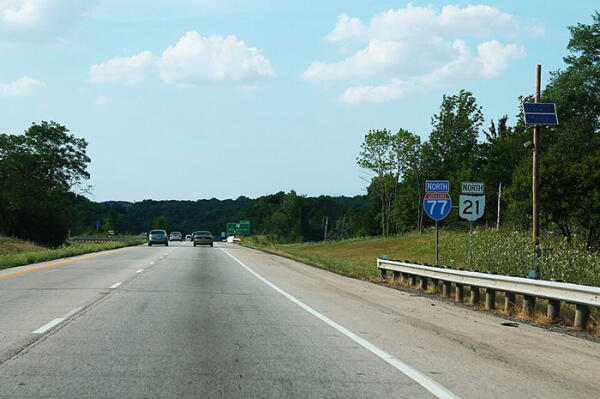
- Interstate: I-77
- Access Four Lane: U.S. Route 30
- State Routes Four Lane: SR 21, SR 62

Rail Service
- Norfolk Southern Class 1
- CSX Class 1
- Wheeling & Lake Erie Class 2
- SEDB Neomodal
- R.J. Corman Class 2
- Republic Short Line Class 3
Port Access
- Lake Erie: Cleveland Port (60 miles north)
- Ohio River: Wellsville Port (60 miles east)

Duty/Tariff Assistance
- NEOTEC
- FTZ #181: Zones and subzones throughout the county

Logistics/Carrier Support
- Kenan Advantage Group
- People Services
- Old Dominion

Passenger Service
- Amtrak: Alliance commuter rail
- SARTA (Stark Area Regional Transportation Authority): Countywide bus service
Efficient, Reliable Access.
Stark County delivers economic mobility through a superior transportation infrastructure system.
With a multimodal infrastructure — comprised of roads, rail, air, and ports — known for efficiency and reliability, Stark County enables just-in-time logistics, increased competitiveness, lower production costs, greater market connectivity, and stronger job creation. It’s simple common sense. Those other communities that lack our strong transportation infrastructure limits your business in so many ways. You would be limited in your reach for raw materials, employees, and customers. Without the kind of deep transportation access you’ll experience in Stark County, you can only do business locally. Your resources would have to be local, your talent would have to be local, and your markets would have to be local. In Stark County, you can be regional, national, and international.
We have the advantages you need. Stark County gives you the mobility of people and freight the expands economic opportunities. Our high-density transportation infrastructure and highly connected network yields a high level of business development.
According to the U.S. Department of Transportation, enhanced transportation networks “attract investment and spur economic growth by improving connectivity among regions, fostering trade, and creating job opportunities.” Businesses operate more efficiently and effectively for greater productivity.
Always Investing in Transportation Infrastructure Improvements.
Nearly 43% of all Stark County spending went toward transportation and infrastructure in 2025.
Stark County doesn’t settle for good enough. Instead, we aim to the future, particularly in the area of transportation infrastructure. We have to maintain and preserve what’s there, all while adding and improving for tomorrow. That’s why we invested more than $63 — greater than 2/5 of the total budget — for that purpose.
It’s a big job for an expansive transportation system. Stark County features a network network with over 1,100 miles of roads, 439 bridges, and mass transit system serving nearly 1.5 million annual passengers.
This matters, because as Transportation Review reports, an efficient transportation infrastructure is essential for economic expansion by increasing revenue and job creation at the same time as reducing both decreasing transportation and manufacturing costs.
Each year, 1.1 billion tons of freight are shipped to, from, or through Ohio (that’s 6th in the nation). By 2050, it’s anticipated that this will increase by 42%. Approximately 2.4 million full-time jobs depend on the state’s transportation infrastructure from everything from tourism and manufacturing to retail and agriculture for $95 billion in wages.
An 18-month study by ODOT and the State of Ohio found that every $66 million spent on active transportation infrastructure generates $131 million in economic activity, making us a major economic engine that employs nearly 2 million workers.
Stark County realizes that all aspects of the region’s transportation infrastructure must be supported in order to continue to provide our area’s businesses with a superior system. As Transportation and Economic Development by Dr. Jean-Paul Rodrigue and Dr. Theo Notteboom posits, all three dimensions of an area’s infrastructure must be addressed. The “core” category encompasses the physical characteristics of transportation and its ability to move passengers and goods in relation to the costs to do so; the “operational” category seeks improvement in performance measures such as efficiency and reliability; and the “geographical” category denotes increasing access to a broader market base to improve productivity and take advantage of economies of scale in production, distribution, and consumption.
Our county’s Moving Stark Forward 2050 does so in the form of a long-range transportation plan that lays out a vision for a safer, more connected, and multimodal transportation network. Employing advanced methodologies, meticulous research, and progressive analysis, it incorporates highway upgrades, expanded public transit, pedestrian and bicycle infrastructure, and trail connections that support both recreation and regional tourism.