Community Support
Workforce Development Programs
Workforce Development Programs are Crucial

Strengthening Stark has a special focus on talent development.
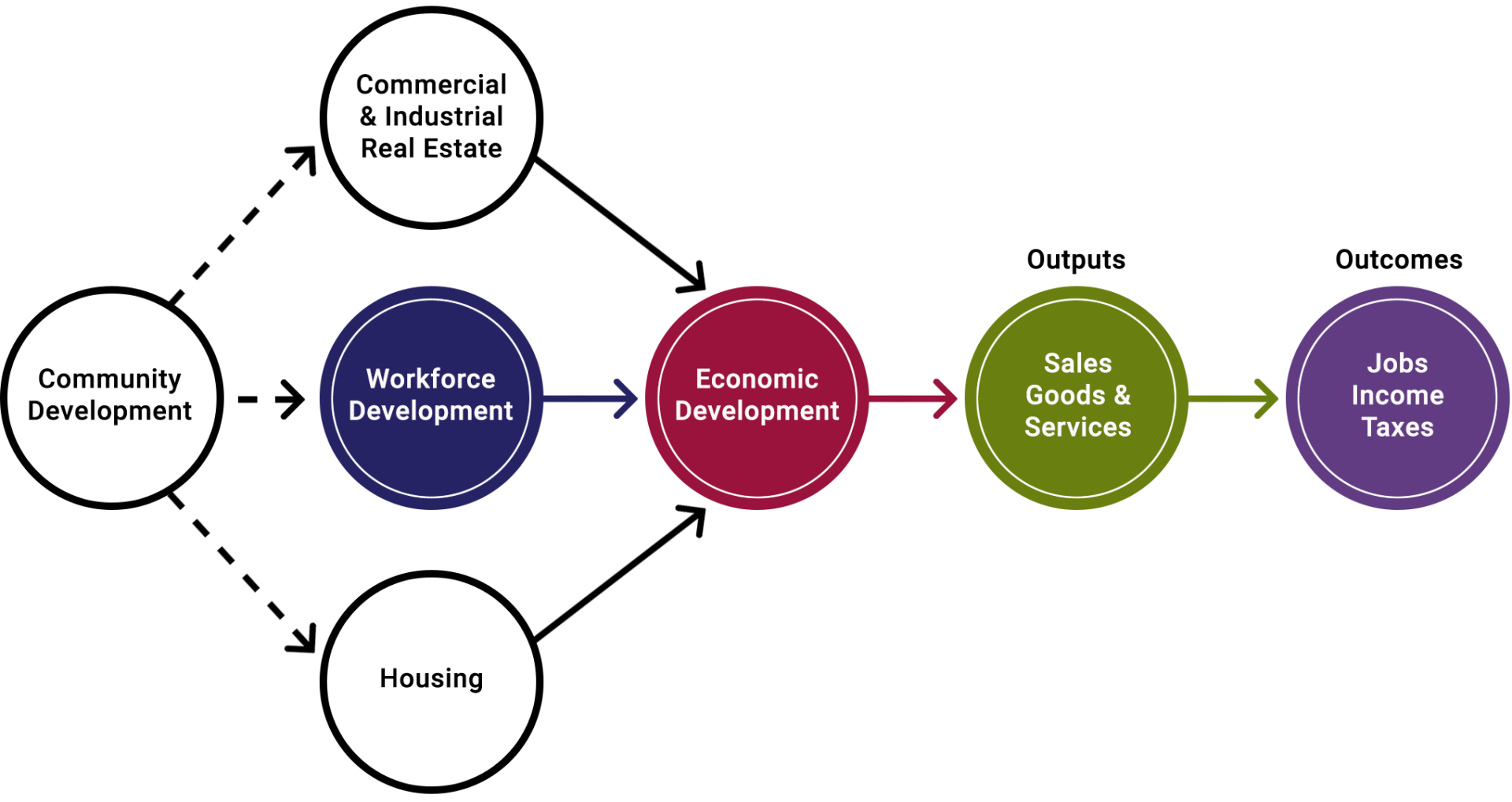
Strengthening Stark’s efforts on behalf of workforce development, together with those dedicated to housing and entrepreneurship, are central to helping the Stark Economic Development Board continue its progress to grow our area.
Career Connect is an initiative of Strengthening Stark that connects unemployed and underemployed job seekers in Stark County to livable-wage jobs. Nine agencies that work directly with job seekers have come together to share data and create best practices that lead to better outcomes for both job seekers and employers.
Many other community partners collaborate to enhance our current and future workforce, including our six higher education institutions, the Stark County Manufacturing Workforce Development Partnership, the Stark Tuscarawas Workforce Development Board, Stark Education Partnership, and many others.
STARK SUCCESS STAT: Stark County is second only to Cleveland in the number of JobsOhio projects in all of Northeast Ohio
National and Regional Recognition for Talent Development
Stark County workforce development programs have been recognized for proven performance.
Stark County is a great place for talent, though you don’t have to take our word for it. Our area offers employers a proven, data-driven talent pipeline that supports growth, reduces hiring risk, and aligns workforce development directly with industry demand. National and regional recognition validates what employers experience on the ground: a workforce system built to respond to business needs. With a holistic approach to economic development, workforce development is central to creating the conditions that attract, retain, and expand our businesses and industries.
A Holistic Approach to Economic Development
Graph Source: The Five Developments: Edward (Ned) Hill, Ph. D., The Ohio State University
An Ardent K-12 Focus Ensures Long-Term Growth
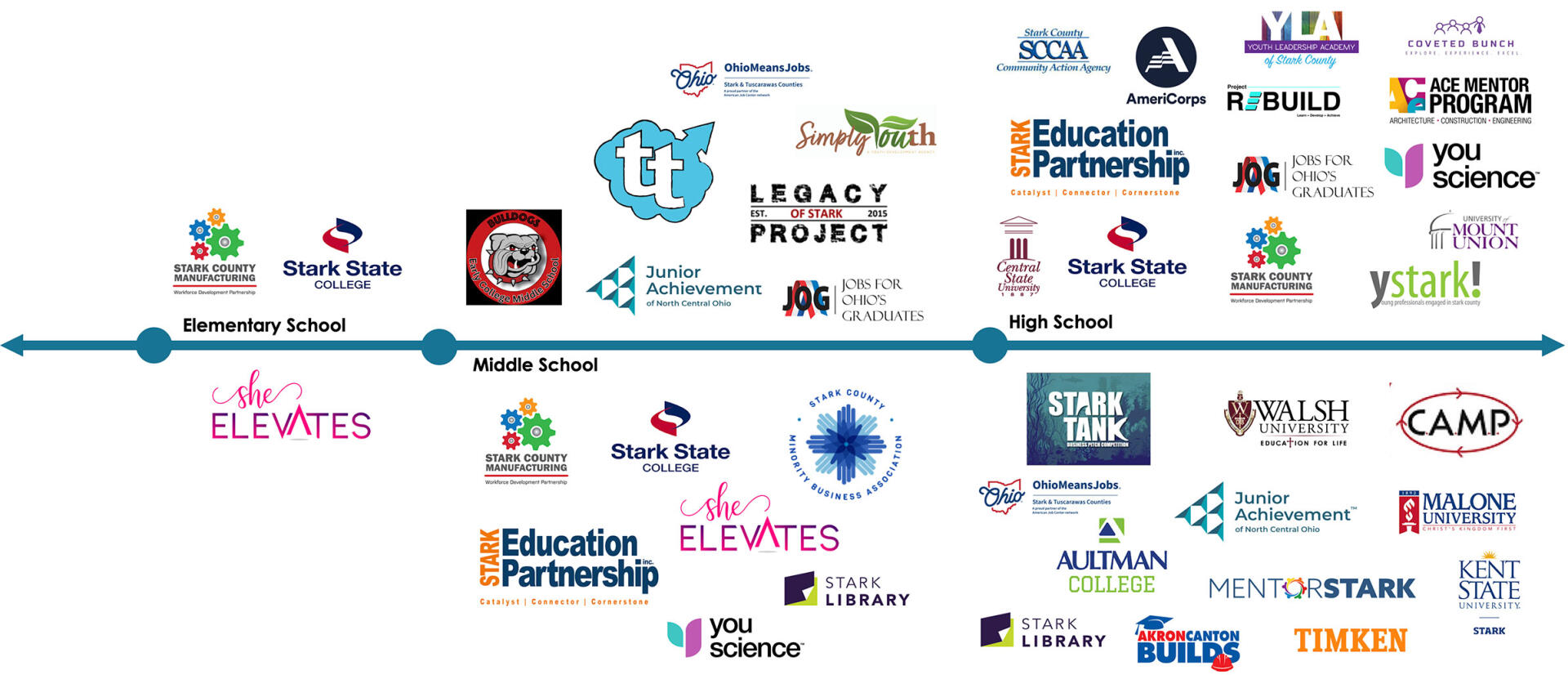
Early, coordinated career exposure ensures employers benefit from a talent pipeline with a long-term, future focus, supporting business needs. Stark Education Partnership has the vision to build generations of successful individuals who fulfill their career potential and grow roots in Stark County. This work is supported by a wide range of community organizations.
Work Preparedness Through a Commitment to Education
With 92.8% of residents in Stark County achieving a high school education, our area offers a workforce that's ready for your needs.
Additionally, 95% of the 18K+ youth ages 16-19 in Stark County are either in school (82.7%), or actively working/looking for work (13.4%).
| Stark County | Count | % |
|---|---|---|
| Less than a high school degree | 18,910 | 7.2% |
| High school degree or equivilant | 152,582 | 58.2% |
| Associate's degree | 25,146 | 9.6% |
| Bachelor's degree or more | 65,486 | 25% |
A Strong Post-Secondary Pipeline

Workforce development starts with a strong education.
Stark County’s postsecondary system is aligned around industry-driven credentials, short-cycle training, and employer-customized pathways, allowing companies to hire, upskill, and retain talent at scale. Stark County boasts six primary degree-granting colleges and universities:
- Stark State College (public community and technical college)
- Kent State University at Stark (public regional university campus)
- Malone University (private, faith-based university)
- Walsh University (private, faith-based university)
- University of Mount Union (private university in Alliance)
- Aultman College of Nursing and Health Sciences (private, specialized healthcare college)
As a primary workforce engine, Stark State College focuses on key traded sector training, including:
- Engineering Technologies
- Information Technology and Cybersecurity
- Supply Chain, Logistics, and CDL Training
- Allied Health and Nursing Pathways
- Customized incumbent worker training programs and apprenticeships.
| Metric | 2021 | 2022 | 2023 | %25+ Population |
|---|---|---|---|---|
| Population 25+ | 281,266 | 281,009 | 281,756 | |
| Associate Degree | 24,904 | 26,241 | 27,240 | 10% |
| BA+ | 64,578 | 65,739 | 68,413 | 24% |
| Some College | 60,376 | 59,292 | 58,734 | 21% |
| 149,858 | 151,272 | 154,386 | 55% |
Stark State talent development creates workers who are ready on Day 1.
Stark State College was recognized by Harvard University as a top producer of job-ready graduates, specifically in high-wage, high-demand fields like engineering technology and manufacturing. This recognition highlights the college's success in aligning its curriculum with industry needs to prepare students for the workforce.
Supporting employers’ needs for technology-oriented upskilling and reskilling, Ohio’s TechCred program allows employers to rapidly upskill existing and new employees in high-demand technical skills. Local institutions, including Walsh University, deliver customized, employer-driven training that lowers cost, accelerates deployment, and scales with business growth. Walsh’s unique, employer-focused approach has been recognized by the National Science Board as well as regionally by Crain’s Cleveland Business.
Adult Workforce Development Focus
Stark County excels in the support of under- and unemployed workers, including those on the sidelines. As the nation’s workforce continues to shrink, ensuring these individuals are ready to work is critical to employers, ensuring the talent needed to fuel their growth.
Facilitated by the Stark Economic Development Board’s Strengthening Stark team, Career Connect is a community collaboration of job navigators focused on placing unemployed and underemployed job seekers into livable wage jobs. Utilizing shared, aggregated data allows the collaboration to create best practices that lead to better outcomes for job seekers and employers.
The Career Connect collaboration engages over 600 job seekers annually, creating a consistent talent pipeline for employers. The model prioritizes placement into locally available, livable-wage roles and emphasizes 90-180-day retention, improving hiring stability for employers.
Delivered by Stark County Navigating Organizations






National Recognition for Workforce Development Strategies
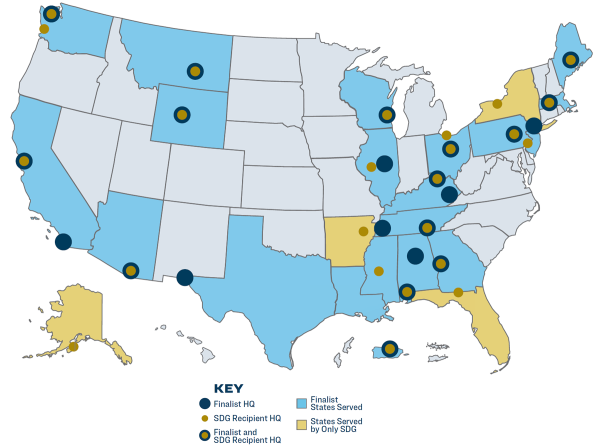
 Stark County’s Reconnecting Canton grant application to the EDA’s Recompete Pilot programming was selected as one of twenty-two finalists to compete for a total pool of $200 million inworkforce development support. Finalists were selected from over 560 applicants!
Our strong collaborations were cited as key reason for our selection. Together we are stronger.While not selected as one of 6 grant awards, Stark County did receive a$500,000 Strategic Planning grant. In addition, we were invited to participate in discussions with Harvard’s Reimagining the Economy initiative and continue to engage with workforce practitioners across the county, incorporating best practices into our expanding workforce development initiative.
Data Supports Our Work
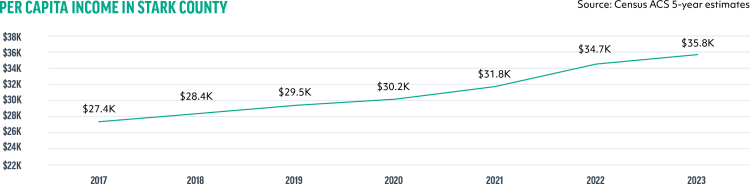
With a focus on a more vibrant economy for all, our focus on talent development is driving results. The percentage of population in poverty has steadily declined since 2017. Per Capita income has also increased during the same period by 34%.
Strong collaboration and leading workforce programming supports an ever-expanding workforce development system, focused on employer needs.
Strong Jobs Strengthen Stark

Workforce development programs start with promoting better jobs.
As a core talent development resource for our area, Strengthening Stark recommends acknowledged key components of good, high-quality jobs to encourage a healthy economy and successful businesses. Key attributes for employers to competitively attract and retain employees include:
- Recruitment and Hiring — Actively recruit qualified applicants, with particular emphasis on those from distressed communities.
- Benefits — Solid, family-sustaining benefits for both full-time and part-time workers.
- Empowerment — Employees who feel valued experience greater satisfaction, which contributes to a stronger probability of retention and employer loyalty. This can be enhanced by a culture that welcomes employee involvement in decisions about their work, its functions, and the overall organization of the company.
- Job Security and Working Conditions — A safe, healthy environment that features steady and adequate compensation and predictable schedules are essential to worker satisfaction. •
- Skills and Career Advancement — Workers should feel they have the chance to move upward based on performance, within a context of a system that makes promotion and advancement a transparent process with understood particulars.
Workforce Development Impacts Economic Development
A broad strategy uses talent development to attract new business and grow existing business.
According to the U.S. Economic Development Administration, a bureau of the Department of Commerce, workforce development programs serve as a critical component of a broader economic development strategy. Strengthening Stark believes in its guiding principles:
- Connect skilled workers to quality job opportunities
- Stronger efforts include community partners such as educational institutions, labor unions, community-based organizations, and economic development organizations
- Earn and learn tactics such as apprenticeships should be emphasized
- Measure, analyze, and share outcome data
- Encourage both private and government funding